
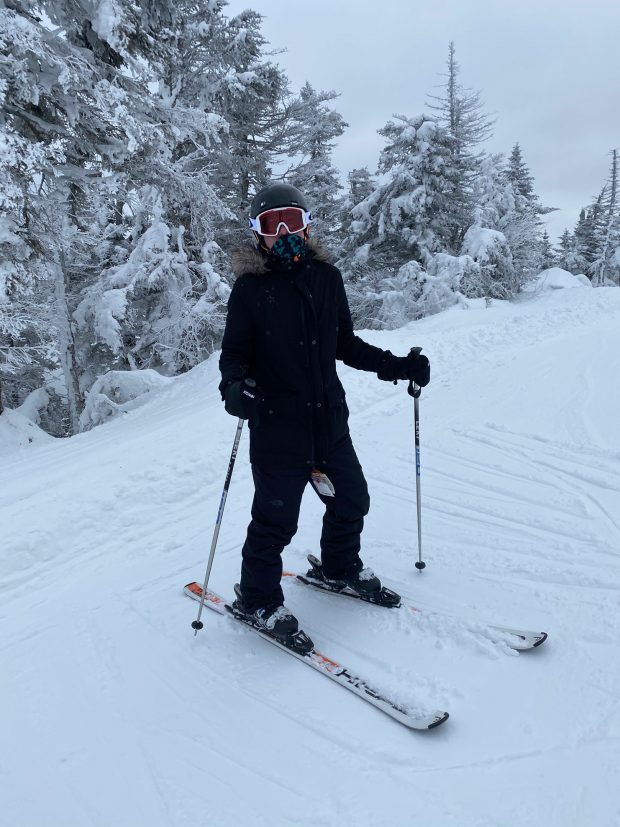
I came to skiing late, and sideways — the way, I suspect, a lot of queer people come to things that have traditionally felt like they weren’t built for us. I didn’t grow up in a family that skied. Nobody in my immediate world treated a February half-term trip to the Alps as a rite of passage. Skiing, in the version of it I’d absorbed from the outside, was a sport for a specific kind of person: wealthy, white, straight, and entirely comfortable in a world of matching salopettes and après-ski bars with questionable music.
When I finally did go — in my early thirties, dragged along by a partner who’d been trying to get me there for years — I went with the prepared scepticism of someone who expects not to see themselves reflected in a place. What I found was more complicated than that. Not a revolution, but something shifting. A world that is, unevenly and imperfectly, beginning to reckon with who it has historically been for — and who it could be for instead.
This is what I actually found in the Alps, and what I think it means.

The Starting Point: What Ski Culture Has Been
It’s worth being honest about the baseline before talking about progress. Alpine ski culture has a particular history. It grew up around European aristocracy and wealthy American tourists in the early twentieth century. It codified itself, over the following decades, into a set of signifiers — the right brands, the right resorts, the right social rituals — that were not subtle about who was welcome. The expense is not incidental; it has always been part of the point.
For LGBTQ+ travellers specifically, the picture has been mixed. The Alps are, broadly speaking, in countries with relatively strong legal protections — France, Switzerland, Austria, Italy (more recently). But legal tolerance and cultural welcome are different things, and ski resorts have not historically been known as particularly progressive social environments. The après-ski bar with its particular brand of loud, boozy masculinity; the group dynamics of ski holidays; the assumption that everyone’s romantic partner is of a different gender — these add up to a texture that can feel, at minimum, like a place you’re tolerated rather than genuinely included.
I want to be careful not to overstate this. I’ve never felt unsafe in an Alpine resort, and I know queer travellers who’ve been going to the Alps for decades without incident. But there’s a difference between safety and belonging, and it’s the latter that I’ve been watching for.
Chamonix: A Different Energy
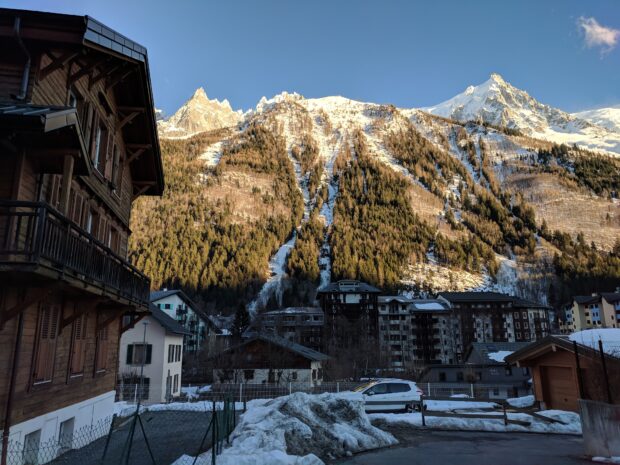
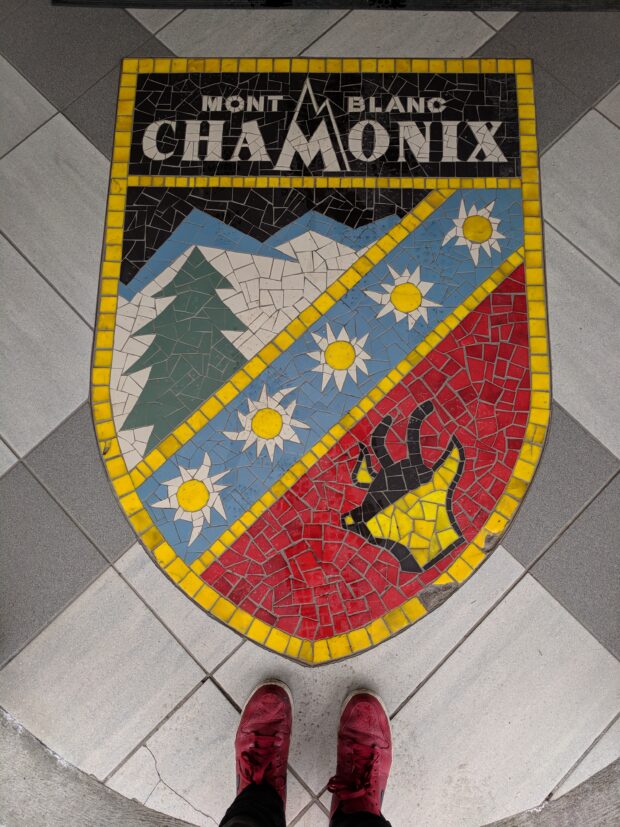
Chamonix was the first place that genuinely surprised me. It’s a town that has always attracted a certain kind of outdoor adventurer — not the resort-hopper who’s there to be seen, but the person who came because of the mountains and stayed for the mountains. That draws a different demographic: younger, more international, more countercultural in a broad sense. The climbing and mountaineering community that gives Chamonix much of its identity has never been particularly concerned with the social conventions of traditional ski culture.
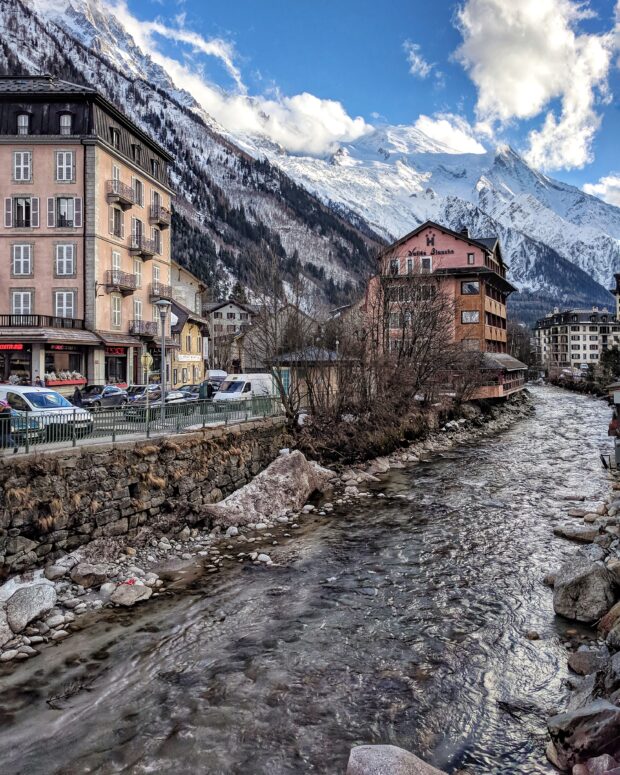
Walking around Chamonix in winter, I noticed a few things. The town has a visible queer presence in a way that, say, Courchevel does not. There are bars and restaurants where the clientele is noticeably mixed in ways that go beyond the usual ski resort demographics. The outdoor sports community — climbers, trail runners, alpinists — tends to be more interested in what you can do than in the social performance of who you are. That’s not the same as active inclusion, but it creates an environment where you’re less likely to feel like an anomaly.
The town itself is also just genuinely interesting. It has the cultural density of a place that takes itself seriously beyond the skiing season — bookshops, independent restaurants, a serious film and arts scene in the warmer months that leaves traces in the winter. For the kind of traveller who finds purely resort-focused destinations a bit thin, Chamonix offers something with more texture.
Getting there is straightforward from Geneva — around 90 minutes, and well-served by transfer, which covers the route regularly. It’s also a good base for the surrounding region, with Italy and Switzerland both reachable for day trips. For solo LGBTQ+ travellers in particular, the ease of access and the international, cosmopolitan feel of the town make it a more comfortable first Alpine experience than some of the more traditional resorts.
The Broader Question: Is the Industry Changing?
The honest answer is: yes, but slowly, and with significant variation between resorts.
The most visible shift has been in marketing. Ski resorts and tourism boards that once produced promotional materials featuring exclusively heterosexual couples and nuclear families have, in the past decade, begun to diversify their imagery. This is easy to be cynical about — rainbow-washing is real, and a stock photo of two men in ski jackets doesn’t tell you much about whether you’ll actually feel comfortable in a place. But representation in marketing does matter at some level, because it signals who a destination is actively trying to attract.
More substantively, some resorts have made genuine efforts at cultural change. Verbier has hosted LGBTQ+-oriented events. Several French resorts now partner with operators who specialise in LGBTQ+ ski trips, which create a critical mass of community that changes the social atmosphere of a place for the week they run. The LGBTQ+ ski event circuit — which includes dedicated weeks in various Alpine resorts — has grown significantly in the past ten years, and the fact that mainstream resorts are now actively competing to host these events is itself meaningful.
The equipment and rental industry has also changed, more quietly but perhaps more significantly. The growth of adaptive skiing — programmes designed for people with physical disabilities — has pushed the industry to think more broadly about who can participate in the sport. The same infrastructure and mindset that makes a resort genuinely accessible for disabled skiers tends to correlate with a broader culture of inclusion. Resorts that have invested seriously in adaptive programmes — Chamonix, Les Arcs, and a number of Austrian resorts among them — tend to have a different feel.
Where the Gaps Still Are
I don’t want this to read as an uncritical endorsement of where the ski world has arrived. There are real gaps, and pretending otherwise doesn’t serve anyone.
Race remains the most glaring one. Alpine skiing is overwhelmingly white, in its participant base, its marketing, its cultural references, and its professional elite. The barriers are multiple — cost, cultural associations, geographic access, representation — and none of them are being addressed with any urgency by the mainstream industry. For travellers of colour, the experience of being visibly in the minority in an Alpine resort can range from mildly uncomfortable to genuinely alienating, and the industry’s response to this has been, at best, tokenistic.
The cost problem is also not going away. Skiing is getting more expensive, not less. Climate change is compressing the viable season and pushing resorts toward higher altitudes, which increases infrastructure costs, which get passed to consumers. Lift passes, equipment rental, accommodation, food, transfers — the all-in cost of an Alpine ski holiday is significant, and it’s the primary reason why the sport’s demographic profile has not changed as dramatically as the marketing might suggest. Inclusion that requires significant financial resources is not really inclusion.
And the après-ski culture, while it varies by resort and by venue, is still in many places characterised by a particular kind of heteronormative excess that can be exhausting if you’re not the intended audience. This is not unique to skiing — it’s a version of the same dynamic you find in many mass-participation sports cultures — but it’s worth naming, because it shapes the texture of a trip in ways that go beyond the formal experience of being on the mountain.
What Inclusive Skiing Actually Looks Like
The most genuinely inclusive ski experiences I’ve encountered have had a few things in common.
They’ve been in resorts with a strong identity beyond the skiing itself — places with cultural depth, interesting food, independent businesses, a reason to be there in summer as well as winter. Chamonix fits this description. So does Innsbruck, which functions as a proper city and happens to have ski areas attached to it. So does Zermatt, though it’s expensive enough that the financial barrier is significant.
They’ve tended to be in resorts where the community of people who live and work there year-round is visible and valued, rather than resorts that shut down entirely at the end of the season. When locals are present — in the restaurants, the bars, the daily life of the town — it changes the culture. You’re in a real place rather than a temporary entertainment facility, and real places tend to have more social complexity and more genuine welcome.
And they’ve been easier to navigate as a solo or queer traveller when the logistics have been handled well. This sounds mundane, but it matters. Travelling alone or as a same-sex couple to an Alpine resort involves a series of small moments where you’re either made to feel normal or subtly reminded that the infrastructure was designed with someone else in mind. A transfer service that simply treats you as a customer without comment, accommodation that doesn’t assume your room configuration, a ski school that doesn’t make assumptions about who you’re with — these accumulate.
A Practical Note for LGBTQ+ Travellers Considering the Alps
If you’re queer and ski-curious — or an experienced skier who’s wondered whether the Alps are worth it — here is what I’d actually tell you.
- Chamonix is the most genuinely welcoming Alpine resort I’ve been to, and the one I’d recommend most enthusiastically to LGBTQ+ first-timers. Its character — outdoor-focused, international, countercultural in a quiet way — creates a more comfortable environment than the more traditional resort towns.
- Verbier and Zermatt are worth considering if budget isn’t a constraint. Both have a cosmopolitan, international clientele that creates a reasonably inclusive atmosphere, and both have made more deliberate efforts at LGBTQ+ welcome than many Alpine resorts.
- The dedicated LGBTQ+ ski weeks that run at various resorts throughout the season are worth looking into if you want community alongside the skiing. The social experience of being in a resort with a critical mass of queer travellers is genuinely different, and these events have grown significantly in quality and variety.
- For the practical logistics — getting from Geneva or other airports to your resort — pre-booking transfers removes one variable from the equation. The Chamonix transfer from Geneva is well-established and takes around 90 minutes; having it sorted before you arrive means one less thing to navigate on the day.
- Don’t let the marketing tell you who the Alps are for. The mountains don’t care.
The Honest Conclusion
The ski world is getting more inclusive. Not as fast as it could, not as thoroughly as it should, and not evenly across resorts or across the different dimensions of inclusion. The financial barrier remains the biggest structural problem and nobody credible is close to solving it. The racial homogeneity of the sport is a genuine failing that cosmetic diversity in marketing doesn’t address.
But on the specific question of LGBTQ+ welcome — which is what I went to the Alps to assess — the answer is genuinely more positive than I expected going in. Chamonix in particular felt like a place that has absorbed enough different kinds of people over enough decades that it has stopped needing to perform a particular version of itself. You can just be there, on the mountain, doing the thing. That’s not a small thing.
I’m going back next winter. Make of that what you will.