
Every few years, someone declares Berlin over.
The rents are too high. Mitte’s squats and artist spaces have been scrubbed clean for boutiques and chain stores. The clubs are full of tourists. Someone who lived here in 2012 will tell you 2008 was better; someone who arrived in 2016 will probably say the same thing about 2012.
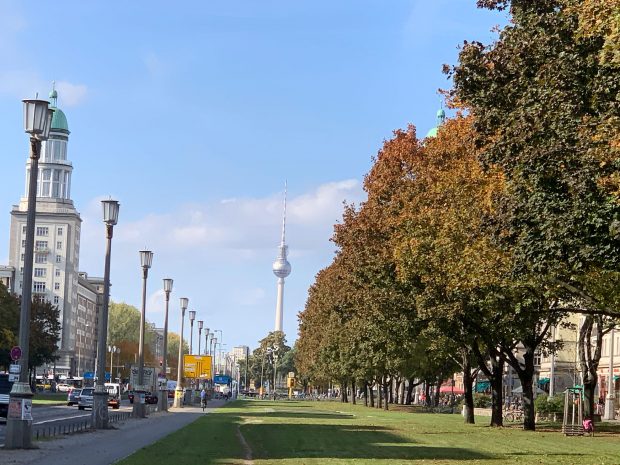
I understand the argument because parts of it are true. Rent prices have gone up, and Berlin now is more expensive than the Berlin I first knew. And some of the mythology around the nightlife has become a business in itself. People fly in with one club on their itinerary, wait in line for hours, and fly home believing they’ve somehow completed Berlin.
But I also left Berlin. I don’t live there anymore, so I have no particular reason to defend it. Leaving made it easier to see what I actually miss and what I’d simply grown used to.
What I miss isn’t Alexanderplatz or getting into the Berghain club. It’s the strange ordinary life of the city: late dinners that become drinks, drinks that turn into a walk somewhere else, a späti beer beside the canal because nobody is ready to go home.
So when I hear that Berlin has lost what made it interesting, I think we’re usually talking about Mitte and a handful of famous clubs, not Berlin as a whole.
Beyond Mitte, Berlin Starts Making Sense Again
I have nothing against Mitte. I spent plenty of time there when I lived in Berlin. But if your argument that Berlin has become boring begins and ends somewhere between Rosenthaler Platz and Alexanderplatz, you’re judging an entire city by the neighborhood that changed most visibly.
Go south.
Kreuzberg still has that odd Berlin ability to change character in a few blocks. Around Kottbusser Tor, Turkish restaurants, bars, late-night food, longtime residents, and newcomers all run into each other. Follow the canal toward Maybachufer and the city loosens up. Markthalle Neun is still somewhere I’d happily lose part of an afternoon.
The area has changed. Of course it has. Some places I loved disappeared, rents went up, and there are now more menus designed for people who discovered the neighborhood through Instagram. But it was never interesting because of one bar or one generation of residents. That’s partly why it survives its own popularity.
Neukölln makes the point even better. I used to spend a lot of time around Weserstraße, where you could go out with no plan and somehow still end up staying much later than intended. That street isn’t some secret anymore, and I wouldn’t describe it now with the same breathless “look what I found!” excitement I once might have.
Still, walk through the streets around Reuterplatz and down toward the canal, and Neukölln doesn’t feel finished. It feels busy, contradictory, occasionally annoying, and very much alive. Honestly, that feels more Berlin to me than any promise that a neighborhood should stay exactly as it was when I first loved it.
The Clubs Changed. The Culture Didn’t Disappear
The nightlife question is harder because this is where the “old Berlin was better” argument has the most truth in it. The famous clubs are international attractions now, with people planning entire weekends around one door and researching how to get past it. That part can be exhausting.
But it doesn’t mean the club culture disappeared. Visitors often treat a few famous names as if they are Berlin nightlife, then judge the whole scene by whether they got inside Berghain.
I never thought Berlin worked that way.
Some of my favorite nights happened because one place led to another, or because somebody knew about a party I hadn’t heard of. Sometimes the club wasn’t particularly famous. Sometimes it wasn’t particularly good, either, until three hours later when suddenly it was.
That’s still where I’d look now: less at the clubs everyone arrives already knowing, more at the parties and smaller nights happening while you’re actually there.
The same thing happens with art. If you’re only moving between the big museums on Museum Island, you’re seeing an important part of Berlin, but not necessarily the part of the city’s art scene that interested me most when I lived there.
KINDL in Neukölln is one place I’d make time for now. It is a former brewery that shut down in 2006 and now runs contemporary art shows out of the old machine house. I like it partly because it still feels connected to the neighborhood rather than sealed off from it: you go for the exhibition, but you’re still very much in Neukölln when you walk back outside. I’d rather see what it’s showing that week than spend another afternoon working through a list of museums because I’m supposed to.
Berlin’s culture hasn’t survived by staying the same. It survives by moving somewhere else before everyone notices.
Berlin Needs More Than a Weekend
This is where short Berlin trips often go wrong.
On paper, the city looks easy enough. Brandenburg Gate. Reichstag. Museum Island. Maybe a famous club. You can technically fit a lot into 48 hours.
But the Berlin that mattered to me was always in the spaces between the planned things.
When I lived there, some places took months to become part of my Berlin. I first found Oslo Kaffeebar because I was taking German classes not far from the place. Other bars became favorites because friends kept choosing them, not because I’d researched them. I ate more boxes of cheap noodles from Nollendorfplatz station than any sensible travel guide would recommend.
None of that is monumental. And that’s precisely the point.
Berlin is a city where repetition improves things. The second time you pass through Kreuzberg, you notice where you actually want to stop. Both neighborhoods grew out of the same 19th-century building boom, when Berlin threw up block after block of tenement housing wrapped around interior courtyards. Half of what’s worth finding sits behind a front building you’d otherwise walk straight past; you only learn that by being there long enough to look. Same with the trains: after a few days in Neukölln, the U-Bahn stops feeling like something you have to think about. You stop crossing the city for a restaurant someone told you was famous and start eating around the corner instead.
Four or five days changes the trip. A week gives you room for afternoons when nothing particularly important happens, and those might be the ones you remember.
If I were crossing the Atlantic for Berlin now, that’s the trip I’d plan: enough time to wander, not a compressed weekend built around a checklist.
Getting to Berlin from the US Without Making the Flight the Hard Part
None of this works if you land exhausted. If I’m going to spend real time doing this properly, I’d rather not spend the first day recovering, which is where business class comes in. It is not a cabin I usually book lightly, but something worth planning for or working out through points if I can.
And it turns out, there are fewer business class flights to Berlin than you’d expect for a capital city, so it’s worth knowing the options before you start looking at fares. Only two airlines fly nonstop from here. United goes from Newark year-round, on a Boeing 767 with United Polaris business class set up in a 1-1-1 layout, so every seat gets aisle access, the most convenient setup in my opinion. Delta flies from JFK too, but only in summer, on an older 767-300ER where the Delta One seats skip the sliding doors you’d get on their newer planes.
That seasonal gap matters more than it sounds. Once October ends, the Delta flight disappears until spring, and United’s Newark route becomes the only nonstop option in either direction until nearly April. If your dates don’t line up with that, a Lufthansa connection through Frankfurt or Munich is the practical fallback.
One more thing worth clearing up, since I still see people mention it: Norse Atlantic used to fly JFK to Berlin. That route ended in September 2025, so if you’re working off an old post or a screenshot, don’t plan around it.
Arrival, at least, is simpler than it used to be. I don’t miss choosing between Tegel and Schönefeld. Everything goes through Brandenburg now, about 18 km southeast of the city, and the FEX express train gets you into Hauptbahnhof in around 22 minutes.
You can keep an eye on the two nonstop schedules and check which one is available when you plan to travel, or request a callback from an agent through BusinessClass.com if you’d rather have someone quickly help find the right flight for your dates and home airport.
I Would Still Go Back
I don’t miss every version of Berlin.
I don’t miss gray February afternoons when the sun seemed to disappear at lunchtime. I don’t miss waiting forever for trains at the wrong hour, or coming home smelling like a smoking bar, or pretending every painfully cool party was actually fun.
But when I go back, there are moments when the city gets me almost immediately. A crowded sidewalk outside a bar in Neukölln. Someone carrying a beer onto the U-Bahn like it’s the most normal thing in the world. Bikes piled along the canal. That particular late-summer light over Kreuzberg when nobody seems interested in going indoors yet.
Berlin changed after I left. So did I.
Maybe that’s why I don’t need it to look exactly like the Berlin I once knew. I just need it to still make an ordinary Tuesday feel like you’ve accidentally stayed out much later than planned.